






Birth Injury Lawyer Chicago, IL
Birth injury cases demand attorneys who can dissect complex medical records and identify exactly where doctors and nurses failed your family. These claims require reviewing fetal monitoring strips that span hours of labor, analyzing nursing notes for missed warning signs, and understanding why a cesarean section that should have happened at 2 PM didn’t occur until 4 PM. Disparti Law Group Accident & Injury Lawyers represents Chicago families whose children suffered preventable harm because medical professionals made mistakes they should not have made. If you need a Chicago, IL birth injury lawyer, we offer free consultations to families seeking answers.
Why Choose Disparti Law Group Accident & Injury Lawyers for Birth Injury Cases in Chicago, IL?
Hospitals don’t make it easy. They have malpractice insurers with deep pockets, defense attorneys who specialize in protecting healthcare systems, and access to medical experts who testify against injured families for a living. Parents trying to care for a child with catastrophic injuries cannot fight that alone.
Illinois Courtrooms Are Familiar Territory
Larry Disparti started Disparti Law Group Accident & Injury Lawyers right here in Chicago. He sits on the Board of Managers for the Illinois Trial Lawyers Association and co-chairs ITLA’s Civil Practice & Rules Committee. Those aren’t honorary titles. They reflect years of work advocating for injury victims at the highest levels of the plaintiff’s bar.
Larry Disparti earned membership in the Million Dollar Advocates Forum and Multi-Million Dollar Advocates Forum. Membership requires verdicts or settlements exceeding one million dollars. Leading Lawyers ranks him among Illinois’s Top 10 Plaintiff Lawyers. The National Trial Lawyers Association includes him in their Top 100.
His undergraduate degree comes from the University of South Florida, and he earned his law degree at Stetson University College of Law. Larry holds bar licenses in four jurisdictions: Illinois, Florida, Arizona, and Washington D.C. He belongs to the National Employment Lawyers Association, the Illinois Workers Compensation Lawyers Association, and the Justinian Society. When families need a personal injury attorney in Chicago, IL willing to challenge hospital systems, our firm answers that call.
Results That Demonstrate What We Do
Disparti Law Group Accident & Injury Lawyers has secured millions of dollars for clients harmed by negligence. A $9.0 million verdict for a worker injured by defective equipment. A $6.6 million verdict for a transit employee hurt when a train derailed. A $1.1 million medical malpractice verdict for a woman whose bladder was damaged during routine surgery. We know how to build cases against healthcare defendants and present them to juries who hold those defendants accountable.
Your Family Pays Nothing Upfront
A child requiring specialized medical care creates financial chaos almost immediately. Therapies cost money. Equipment costs money. Parents miss work. Adding legal bills to that equation would break most families. We handle birth injury cases on contingency. You pay nothing unless we win. That structure lets us pour resources into your case without compounding the stress you already face.
What Families Say About Working With Us
⭐⭐⭐⭐⭐
“She helped me through this whole process. I had no idea what i was doing. I had been fighting with disability on my own for two years getting no where on it. She did everything and was always available to answer my questions and explained everything to me in a way that i would understand. She saved my family. I Love what they have done for me. I would still be waiting and fighting. Thank You So Much….” — Sky Powell
Read more reviews on our Google Business Profile.
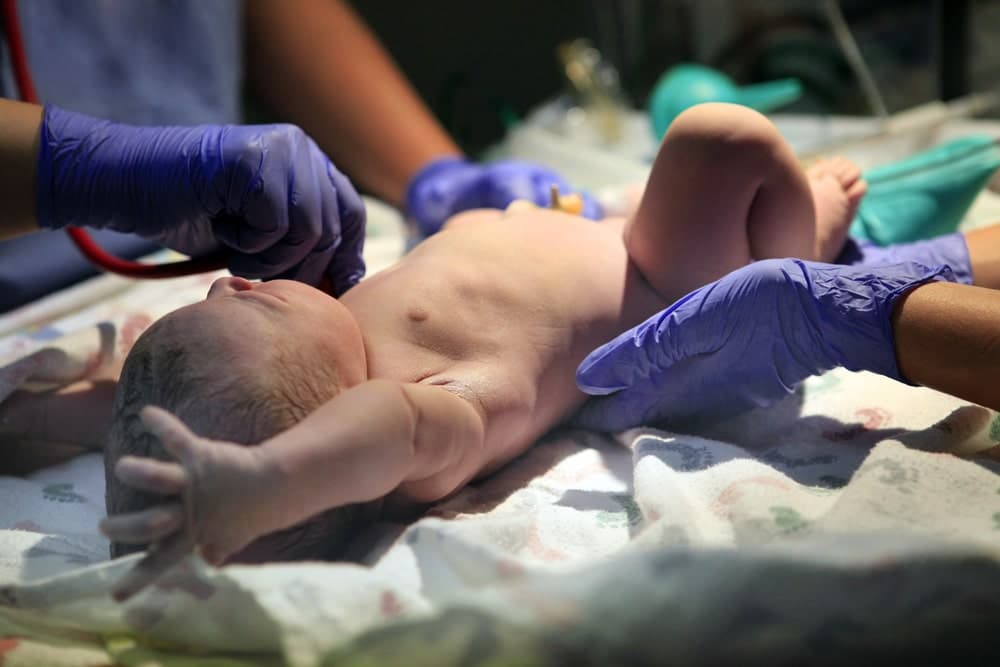
Types of Birth Injury Cases We Handle in Chicago
Medical errors during pregnancy, labor, and delivery take many forms. The consequences range from temporary complications to permanent disability. We represent families dealing with:
- Cerebral palsy from oxygen deprivation. Fetal distress signals appear on monitors. Nurses should recognize them. Doctors should act on them. When they don’t — when a necessary cesarean section gets delayed by thirty minutes, an hour, two hours — brain cells die from lack of oxygen. The damage is permanent. The cerebral palsy diagnosis follows weeks or months later, but the injury happened in that delivery room when nobody responded fast enough.
- Brachial plexus injuries and Erb’s palsy. A baby’s shoulder gets stuck during delivery. There are proper techniques for handling shoulder dystocia, and there are improper ones. Excessive pulling, twisting, or force damages the bundle of nerves controlling arm movement. Some children recover partial function. Others face lifelong paralysis.
- Traumatic brain injuries. Forceps applied incorrectly can fracture skulls. Vacuum extractors used improperly cause hemorrhages. Prolonged oxygen deprivation during labor destroys brain tissue. These injuries manifest as developmental delays, seizure disorders, cognitive impairment, and physical disabilities that affect every aspect of a child’s life.
- Spinal cord damage. Delivery requires careful handling of a newborn’s delicate spine. Excessive traction or rotation during extraction can cause injuries that result in paralysis or permanent neurological deficits.
- Facial nerve injuries. Pressure from forceps or a difficult passage through the birth canal sometimes damages facial nerves. A baby’s face may droop on one side. The paralysis is sometimes temporary, sometimes permanent.
- Bone fractures. Clavicles break during difficult deliveries, particularly when shoulder dystocia occurs and providers use excessive force rather than proper maneuvers.
- Infections that should have been prevented. Group B strep is testable and treatable. Chorioamnionitis requires urgent intervention. When hospitals fail to screen, fail to treat, or fail to maintain sterile technique, newborns develop meningitis, sepsis, and other infections that can kill or cause permanent brain damage.
- Kernicterus from untreated jaundice. Bilirubin levels climb. The baby turns yellow. Phototherapy can prevent brain damage if started in time. When hospitals discharge jaundiced babies without proper follow-up or ignore warning signs, bilirubin reaches toxic levels and destroys brain tissue.
Illinois Legal Requirements for Birth Injury Claims
Medical malpractice law in Illinois creates hurdles that families must clear before they can hold hospitals and doctors accountable.
What You Must Prove
Winning a birth injury case requires showing that medical providers deviated from the accepted standard of care and that this deviation caused your child’s injuries. Standard of care means what a competent healthcare provider in the same specialty would have done under similar circumstances. A family practitioner isn’t held to the same standard as a maternal-fetal medicine specialist. An overworked resident isn’t judged identically to an attending physician. But within those categories, there are baseline expectations that professionals must meet.
Proving deviation typically requires testimony from qualified medical professionals who can explain what should have happened and why what actually happened fell short.
The Affidavit Requirement
Illinois law under 735 ILCS 5/2-622 demands that plaintiffs file an affidavit along with a report from a qualified healthcare professional when initiating malpractice cases. That report must state that reasonable cause exists for the lawsuit. This requirement forces attorneys to investigate thoroughly and consult medical specialists before filing anything. It weeds out frivolous claims, but it also means legitimate cases require significant upfront work.
Time Limits That Cannot Be Ignored
Birth injury claims involving minors generally must be filed before the child turns eight years old. Other deadlines may also apply depending on circumstances. These limitations periods exist to protect defendants from stale claims, but they also mean families who wait too long lose their rights entirely. Evidence disappears. Witnesses forget details or become impossible to locate. Medical records get harder to obtain. Consulting an attorney promptly protects your options.
No Damage Caps in Illinois
The Illinois Supreme Court struck down caps on non-economic damages in medical malpractice cases in Lebron v. Gottlieb Memorial Hospital back in 2010. That ruling means no artificial ceiling limits what juries can award for pain and suffering, disability, or other non-economic losses. Children with catastrophic birth injuries can receive compensation that reflects the true magnitude of what they’ve lost.
What Damages Are Recoverable in Chicago Birth Injury Cases?
Birth injuries create expenses and losses that dwarf most other personal injury claims. A child who requires lifetime care generates costs measured in millions of dollars.
Economic Damages
Medical expenses start accumulating before families leave the hospital. NICU stays run thousands of dollars per day. Surgeries to address orthopedic injuries, place feeding tubes, or relieve pressure on the brain add up quickly. Then come years of physical therapy, occupational therapy, speech therapy, and developmental interventions. Children with severe injuries need wheelchairs, orthotics, communication devices, and adaptive equipment that must be replaced as they grow. Some require 24-hour nursing care or residential placement. Projecting these costs across a lifetime produces staggering figures.
Lost earning capacity compensates for what the child will never be able to earn due to their disabilities. Economists analyze what someone with similar demographics typically earns over a working lifetime, then calculate what the injured child has lost.
Home modifications become necessary when a child cannot navigate standard doorways, bathrooms, or stairs. Ramps, lifts, accessible bathrooms, and widened hallways transform family homes. Wheelchair-accessible vehicles represent another major expense.
Educational costs often exceed what public schools provide. Specialized tutoring, private therapies, and appropriate educational programming require out-of-pocket spending.
Non-Economic Damages
Pain and suffering encompasses the physical agony of surgeries, therapies, and living with a damaged body. Children who understand their limitations experience emotional suffering that also warrants compensation. A ten-year-old who watches classmates run while she sits in a wheelchair understands exactly what she’s missing.
Loss of enjoyment of life addresses opportunities that will never exist. No Little League. No prom. No college experience. No career. No independent living. No marriage or children of their own, in many cases. These losses are profound even when they’re difficult to quantify.
Parents may recover damages for their own emotional distress and for the loss of the parent-child relationship they expected.
Punitive Damages
When hospitals engage in conduct that goes beyond negligence into willful disregard for patient safety, punitive damages may apply. These awards punish egregious behavior and send messages to the healthcare industry about unacceptable practices.
What Steps Should I Take If You Suspect a Birth Injury in Chicago?
Families who believe their child was harmed during delivery should act deliberately to protect both their child’s health and their legal options.
1. Prioritize medical care above everything else. Your child’s health comes first. Follow treatment recommendations, attend every appointment, and make sure all of your child’s symptoms and challenges are properly documented in medical records.
2. Obtain complete medical records now. You have an absolute right to copies of everything: prenatal records, labor and delivery documentation, fetal monitoring strips, nursing notes, physician orders, NICU records, and discharge paperwork. Request records from every facility and provider involved. Illinois law requires providers to furnish copies within 30 days.
3. Start a detailed journal immediately. Write down what doctors and nurses tell you about your child’s condition. Document developmental milestones — both achieved and missed. Record symptoms, setbacks, and improvements. Note the names of everyone involved in your child’s care. These contemporaneous notes become valuable evidence years later.
4. Preserve every document that arrives. Medical bills, insurance statements, therapy records, school evaluations, and correspondence with providers all matter. Create a system for organizing them chronologically.
5. Be cautious with hospital personnel. Risk managers may visit your room, call your home, or send letters expressing concern. Their job is protecting the hospital, not helping your family. Politely decline to discuss what happened until you’ve spoken with an attorney.
6. Do not sign anything without legal review. Hospitals sometimes present documents that look routine but contain language waiving claims. Quick settlement offers may arrive before families understand the true extent of injuries. Signing prematurely can destroy your child’s rights.
7. Educate yourself about your child’s diagnosis. Understanding the condition helps you participate in care decisions and recognize whether that condition could have resulted from delivery errors.
8. Contact a birth injury attorney while evidence remains fresh. Medical records tell part of the story, but memories fade and witnesses become harder to locate as time passes. Early consultation lets attorneys send preservation letters, identify necessary experts, and begin building your case while evidence still exists.
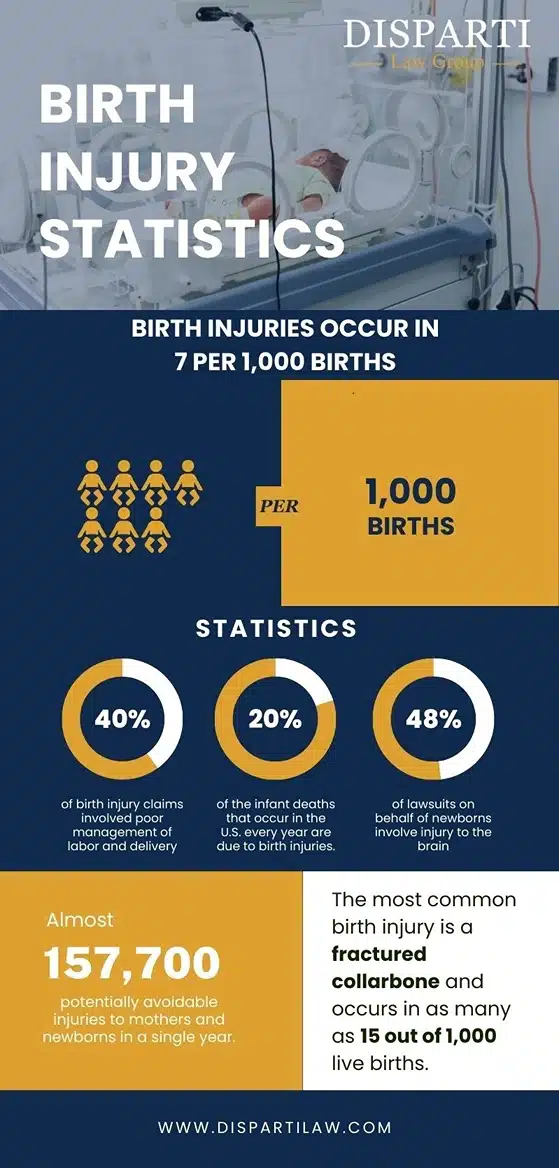
Birth Injury Statistics in Chicago
Birth injuries affect thousands of American families every year. Some injuries are truly unavoidable even with perfect care. Many are not.
The Centers for Disease Control and Prevention reports that birth injuries occur in roughly 6 to 8 of every 1,000 live births nationally. That translates to tens of thousands of affected children annually. The percentage may seem small until your child becomes one of them.
Research from the Agency for Healthcare Research and Quality shows that birth trauma rates vary dramatically between hospitals. Some facilities have injury rates multiple times higher than others with similar patient populations. Staffing levels, safety protocols, and institutional culture all affect outcomes.
Studies published through the National Institutes of Health identify failures in fetal heart rate monitoring interpretation as a leading cause of preventable brain injuries. Electronic monitors generate data continuously throughout labor. That data only prevents harm if someone is watching, understands what they’re seeing, and acts appropriately when warning signs appear.
The Joint Commission accredits hospitals and tracks sentinel events, unexpected occurrences causing death or serious harm. Perinatal injuries rank among the most common categories. The Commission has issued multiple alerts about preventing birth-related harm.
Data from the Illinois Department of Public Health indicates that Cook County hospitals deliver tens of thousands of babies annually. Even injury rates measured in single-digit percentages mean hundreds of affected families in the Chicago area alone.
The American College of Obstetricians and Gynecologists emphasizes that timely intervention when fetal distress appears can prevent most hypoxic brain injuries. Delays kill brain cells. Minutes matter. When hospitals have protocols requiring emergency cesarean capability within 30 minutes, exceeding that timeframe may constitute negligence.
Chicago Birth Injury Lawyer FAQs
How can I tell if my child’s injury resulted from medical negligence?
You often cannot tell on your own, and that’s normal. Determining whether malpractice occurred requires physicians who specialize in obstetrics and maternal-fetal medicine to review records and identify where care fell short. Warning signs that warrant investigation include a healthy pregnancy followed by unexpected delivery complications, fetal distress on monitors followed by delayed intervention, difficult delivery requiring forceps or vacuum extraction, low Apgar scores, NICU admission, or seizures in the first days of life. Conditions like cerebral palsy sometimes result from preventable delivery errors.
What is the deadline for filing a birth injury lawsuit in Illinois?
Claims on behalf of minors generally must be filed before the child’s eighth birthday, though other deadlines may apply depending on circumstances. The birth injury statute of limitations involves rules complicated enough that consulting an attorney promptly makes sense for any family considering a claim.
Can we sue both the hospital and the doctor?
Potentially, yes. Hospitals bear responsibility for their employees’ negligence and may face direct liability for inadequate staffing, poor training, defective equipment, or dangerous policies. Individual physicians may be hospital employees or independent contractors — a distinction that affects liability analysis. Part of our job involves identifying every party who shares responsibility for your child’s injuries.
What if my child’s injury wasn’t obvious at birth?
Many birth injuries, particularly those involving brain damage, don’t become apparent until a child misses developmental milestones months or even years later. Illinois law accounts for delayed discovery, which can affect when the statute of limitations begins running. The key is acting once you recognize something may be wrong.
How much does hiring a birth injury lawyer cost?
Nothing upfront. We handle these cases on contingency, taking our fee as a percentage of any recovery. If we don’t win, you owe us nothing. Families should never avoid pursuing legitimate claims because they cannot afford legal fees.
What kind of compensation might my family receive?
Severe birth injuries can result in compensation reaching millions of dollars. Economic damages cover past and future medical expenses, lifetime care costs, lost earning capacity, home modifications, and specialized equipment. Non-economic damages address pain and suffering, loss of enjoyment of life, and parents’ emotional distress. Every case is different, and we evaluate each one individually based on injury severity, care requirements, and projected life expectancy.
How long do these cases typically take?
Birth injury litigation is rarely quick. Thorough investigation takes time. Identifying and retaining appropriate medical specialists takes time. Discovery disputes, depositions, and potential motions extend timelines further. Cases resolve anywhere from one to several years depending on complexity and whether trial becomes necessary.
Will we have to go to court?
Most birth injury cases settle before trial. However, preparing thoroughly for trial strengthens settlement negotiations considerably. Defendants know which attorneys will actually try cases and which will accept lowball offers to avoid the courtroom. We prepare every case as if twelve jurors will decide it.
What if our child has already died?
Illinois permits wrongful death claims when medical negligence causes a child’s death. These cases have specific requirements about who may file and what damages are available. Families can pursue compensation even after losing a child.
What medical records should we gather?
Request everything: prenatal care records, hospital admission documentation, labor and delivery records including fetal monitoring strips, nursing notes and physician orders, operating room records if applicable, NICU documentation, discharge summaries, and all subsequent treatment records related to your child’s condition. Comprehensive records from every involved facility and provider are essential.
The doctor told us the injury was unavoidable. Should we believe that?
Treating physicians have obvious reasons to minimize their own potential liability. What a defendant doctor tells a patient’s family should never be taken as the final word on whether malpractice occurred. Independent medical specialists with no relationship to the hospital can review the same records and reach very different conclusions.
We signed consent forms before delivery. Does that matter?
Consent forms acknowledge that medical procedures carry inherent risks. They do not authorize substandard care. Consenting to a cesarean section does not consent to a cesarean section performed negligently. If providers deviated from accepted standards and caused injury, consent forms provide no protection. Medical malpractice and informed consent are separate legal concepts.
What kind of specialists testify in birth injury cases?
These cases typically require testimony from obstetricians, maternal-fetal medicine specialists, neonatologists, pediatric neurologists, labor and delivery nurses, life care planners who project future needs, and economists who calculate lost earning capacity and present value of lifetime expenses. Expert witnesses in medical malpractice lawsuits play a critical role in establishing the standard of care.
How do we pay for our child’s care while the lawsuit is pending?
Health insurance and Medicaid cover many expenses. Early intervention programs provide therapy services. Some medical providers accept liens, agreeing to wait for payment until a case resolves. The process of how medical bills get covered in injury cases involves coordination between multiple sources, and we help families identify resources so children receive necessary treatment regardless of litigation timing.
What makes Disparti Law Group Accident & Injury Lawyers different?
Larry Disparti built this firm specifically to take on powerful defendants who think their resources make them untouchable. Hospitals with corporate legal departments do not intimidate us. We combine aggressive litigation with genuine compassion for families navigating impossible circumstances. Clients work directly with attorneys who explain complex medical and legal issues in plain language and fight relentlessly for maximum compensation.
Risk Factors That Increase Birth Injury Danger in Chicago Hospitals
Certain conditions make preventable injuries more likely:
Understaffing on labor and delivery units. When nurses monitor too many patients simultaneously, warning signs get missed. Fetal heart rate abnormalities go unnoticed for critical minutes. Requests for physician evaluation get delayed.
Shift changes and communication breakdowns. Information falls through cracks during handoffs. The nurse who noticed concerning patterns goes home. The replacement doesn’t receive adequate briefing. Continuity of care suffers.
Delayed cesarean sections. Every hospital should have the capability to begin an emergency cesarean within 30 minutes of the decision. Operating room availability, anesthesia coverage, and surgical team assembly all affect whether that standard is met. When it isn’t, babies suffer brain damage from prolonged oxygen deprivation.
Misinterpretation of fetal monitoring. Electronic fetal monitors produce continuous data. Someone must watch that data, understand what non-reassuring patterns look like, and escalate concerns appropriately. Training deficiencies and fatigue compromise all three.
Improper shoulder dystocia management. When a baby’s shoulder gets stuck, providers must execute specific maneuvers to free the child without causing brachial plexus injury. Excessive force and improper technique cause damage that proper training would prevent.
Failure to respond to maternal emergencies. Preeclampsia, placental abruption, uterine rupture, and umbilical cord prolapse all require immediate action. Delays cost lives and cause permanent injuries.
Medication dosing errors. Pitocin stimulates contractions, but excessive doses cause hyperstimulation that reduces oxygen delivery to the fetus. Proper monitoring and dosage adjustment prevent this complication.
What Are Important Local Resources for Birth Injury Families in Chicago?
The following resources may help families dealing with birth injuries in Chicago. Disparti Law Group Accident & Injury Lawyers does not endorse these organizations and provides this information for convenience only.
Lurie Children’s Hospital — (312) 227-4000
Shirley Ryan AbilityLab — (312) 238-1000
Easter Seals Metropolitan Chicago — (312) 939-8080
Illinois Early Intervention Program — (800) 323-4769
Illinois Department of Public Health — (217) 782-4977
Disparti Law Group Accident & Injury Lawyers Chicago Birth Injury Lawyer
121 W Wacker Dr, Chicago, IL 60601
Contact Disparti Law Group Accident & Injury Lawyers
When medical negligence harms your child during delivery, you need attorneys willing to fight hospital systems and their insurers without hesitation. Disparti Law Group Accident & Injury Lawyers has the resources these cases require and the determination to see them through.
We offer free consultations for families who believe their children were injured by preventable medical errors. No obligation exists, and you pay nothing unless we recover compensation. We will review what happened, consult with medical professionals, and tell you honestly whether you have a viable claim.
Your child’s future matters. Contact our Chicago office to schedule a consultation with a Chicago, IL birth injury attorney committed to holding negligent healthcare providers accountable.